
Guide - Published on March 4, 2026
Margin vs Markup: how to set price without losing money
Setting the right product price is one of the most important decisions in retail and ecommerce. Yet many teams make the same mistake: they confuse margin and markup.
At first glance they seem equivalent. Both describe how much you earn on a sale. But they use different bases, and that difference leads to pricing decisions that directly hurt profitability.
The outcome is usually the same: prices that look correct in spreadsheets but do not support real business growth.
In this guide you will learn
- The real difference between margin and markup.
- How to calculate each metric correctly.
- How to convert markup into margin.
- How to set prices based on target margin.
- Which pricing mistakes destroy profitability in retail and ecommerce.
If you manage a product catalog, understanding these metrics can be the difference between selling a lot and selling profitably.
What is profit margin
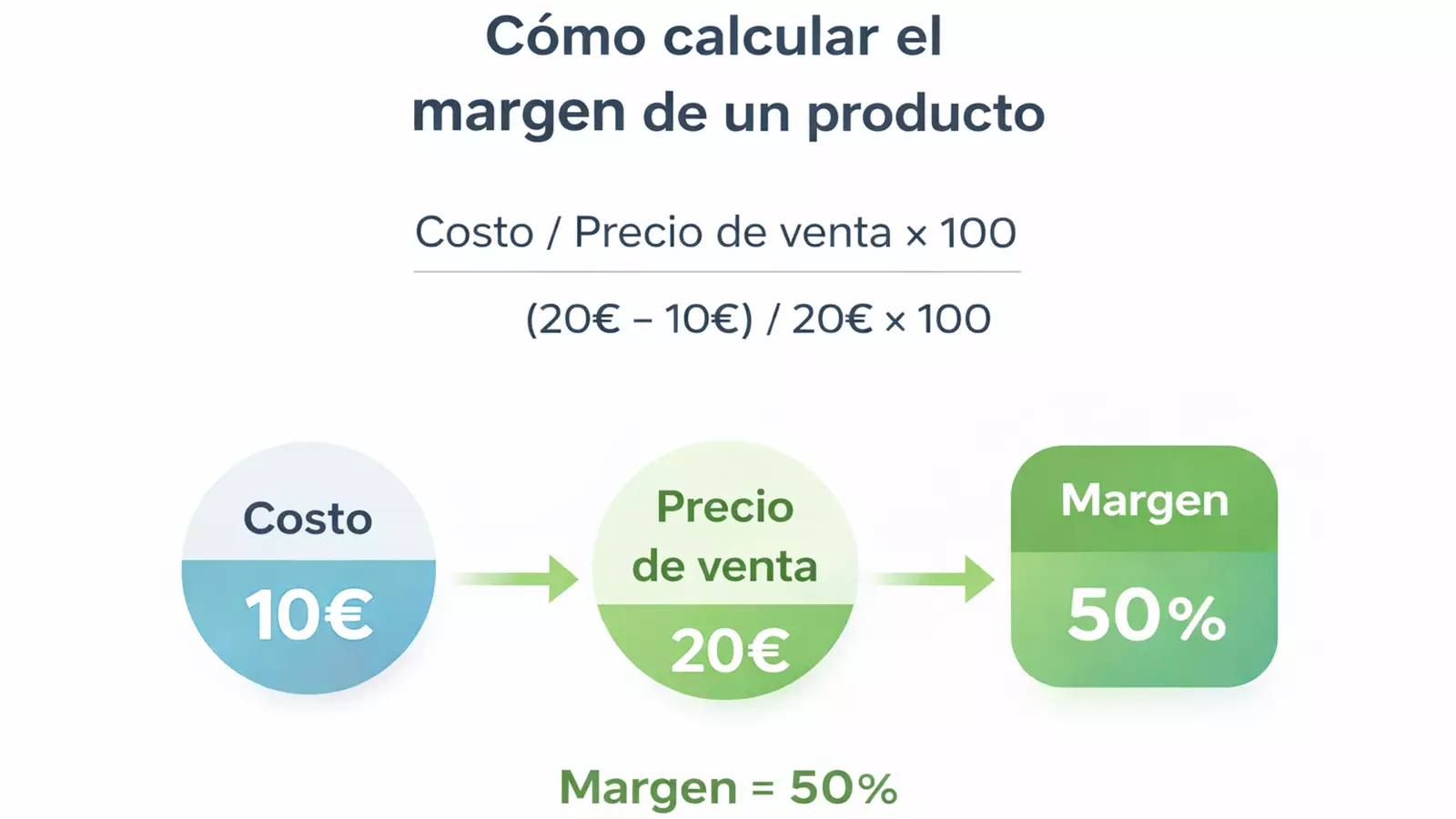
Profit margin measures what percentage of the selling price becomes gross profit. It is calculated using the final selling price.
Margin (%) = (Selling price - Cost) / Selling price x 100
This metric matters because it shows how much money remains after covering product cost. That remaining amount still needs to cover marketing, operations, logistics, channel commissions, taxes, and business profit.
This is why most companies use margin as their primary pricing KPI.
Simple example
Product cost: 10 EUR
Selling price: 20 EUR
Margin = (20 - 10) / 20 x 100 = 50%
What is markup
Markup measures how much price increases relative to cost. It is calculated with cost as the base.
Markup (%) = (Selling price - Cost) / Cost x 100
Markup is often used in retail to define quick pricing rules, such as 100% markup, 150% markup, or 200% markup.
Example
Product cost: 10 EUR
Selling price: 20 EUR
Markup = (20 - 10) / 10 x 100 = 100%
Difference between margin and markup
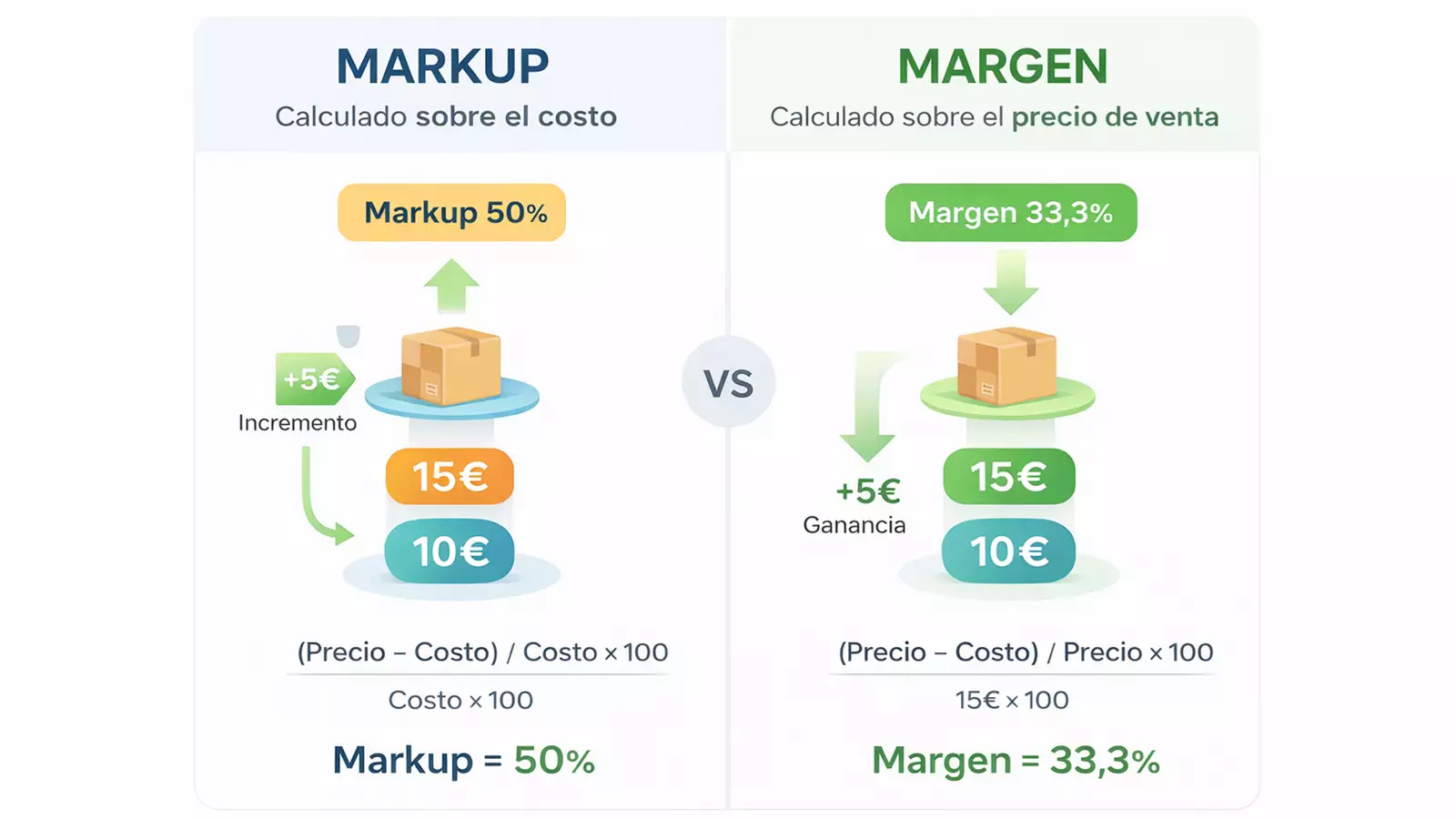
These concepts look similar, but they use different calculation bases. Markup is cost-based. Margin is selling-price-based. That is why the percentages are never equal.
Example: cost 10 EUR, selling price 15 EUR.
Markup = 50%
Margin = 33.33%
This explains why many companies overestimate profitability. If the team believes it has 50% margin when real margin is 33%, every pricing decision starts from wrong assumptions.
Interactive margin vs markup calculator
Calculate margin, markup, target price, and estimated monthly profit.
Margin vs markup comparison table
Base cost: 10 EUR
| Selling price | Markup | Margin |
|---|---|---|
| 15 EUR | 50% | 33.33% |
| 20 EUR | 100% | 50% |
| 30 EUR | 200% | 66.67% |
How to calculate price for a target margin
In many businesses, the goal is not fixed markup, but minimum target margin. Use this formula to get the required selling price.
Target price = Cost / (1 - Target margin)
Example: cost 10 EUR, target margin 40%.
Target price = 10 / (1 - 0.40) = 16.67 EUR.
If you sell below that price, real margin will be below target.
Suggested pricing strategies
Choose one strategy to autofill selling price and recalculate.
Why real margin is often lower than expected
Even if price is calculated correctly, final margin can be reduced by operational factors: marketplace fees, commercial discounts, logistics costs, taxes, and customer acquisition costs.
If these factors are not included from the beginning, real margin ends up far below expectations.
Example: discount and fee impact
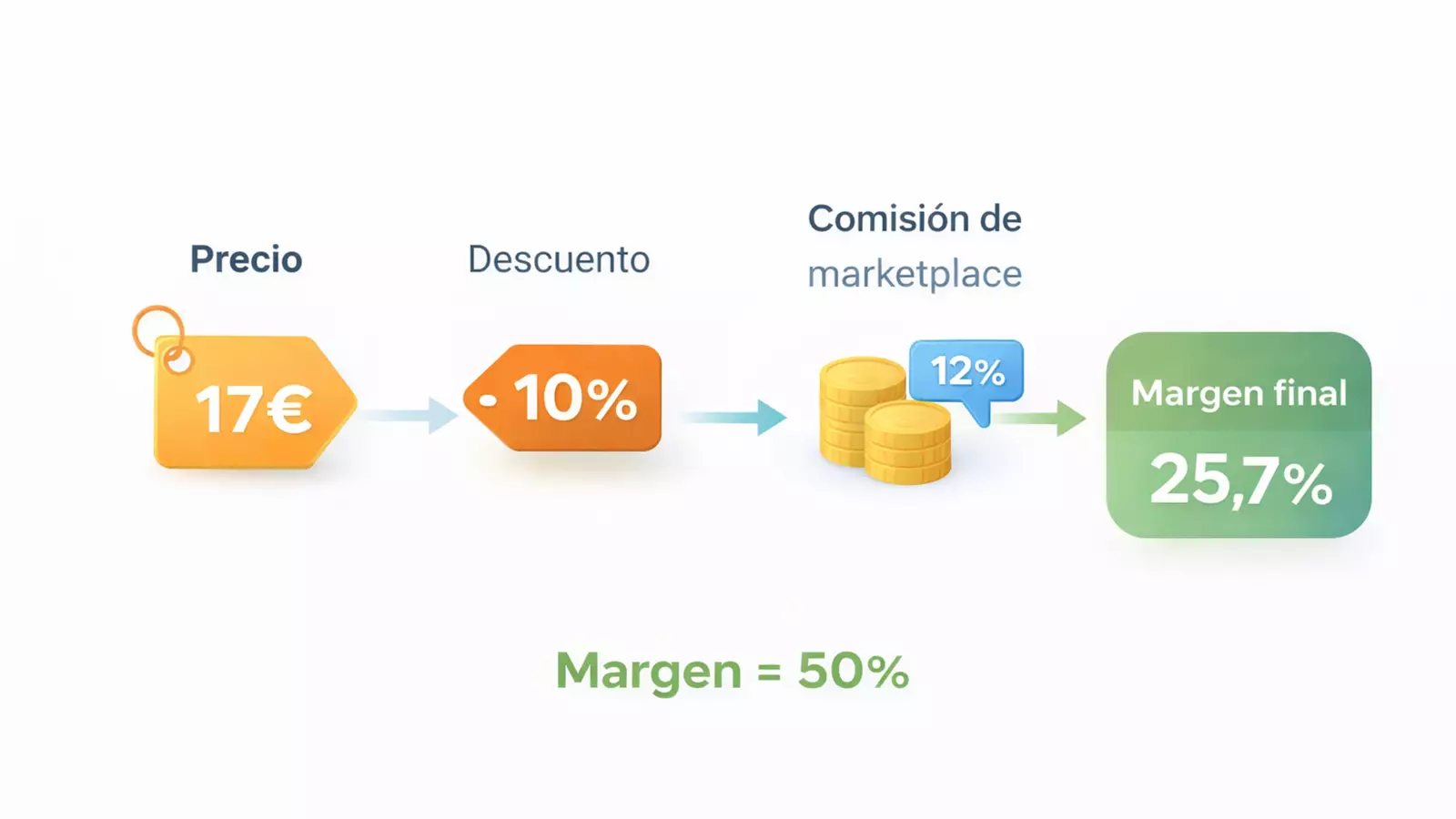
Scenario: cost 10 EUR, price 17 EUR. Initial margin: 41.18%. Add a 10% promotional discount and 12% marketplace commission, price after discount becomes 15.30 EUR, net revenue becomes 13.46 EUR, and final margin drops to 25.73%.
Real impact simulator
Calculate how discount and channel commission change your final net margin.
Common pricing mistakes
- Confusing margin and markup.
- Not repricing after promotions.
- Using outdated costs.
- Not measuring margin per channel.
- Scaling catalog without margin rules.
How to protect margin in a large catalog
As catalog size grows, manual margin control becomes harder. Teams with stable profitability usually enforce operating discipline:
- Define minimum margin by category.
- Block prices below target margin.
- Auto-update costs.
- Simulate discount impact before publishing.
- Review SKU margin weekly.
Margin, markup, and landed cost
Another critical point is landed cost, the real product cost once it is ready to sell. It includes product cost, transport, duties, import taxes, and logistics handling.
If pricing is based only on purchase cost, margin is distorted. First compute real cost, then apply pricing rules.
Continue with how to calculate real landed cost per product.
Profitable pricing is not intuition
Many businesses price products by watching competitors or using simple multipliers. But profitable pricing requires operating discipline.
When margin and markup are understood correctly, pricing becomes a strategic, data-based decision. This protects SKU profitability, improves cross-channel comparisons, and supports healthy catalog growth.
How Margynn helps with margin calculation
Managing margins manually gets hard when catalogs grow or when products come from multiple suppliers. Margynn automates key steps: upload invoice or proforma, extract product data, calculate landed cost per SKU, and preview margin before publishing to ecommerce or POS.
This helps teams price with real data and reduce human errors in inventory and catalog operations.

Turn pricing into a technical and profitable decision
Define clear margin and markup rules, and validate discount and fee impact before publishing.
Frequently asked questions
What is the difference between margin and markup?
Markup is calculated on cost, while margin is calculated on selling price.
Which metric should I use to set price?
Margin is usually the best KPI because it reflects real profitability over final price.
Does high markup guarantee strong margin?
No. You can still have low margin if final price is not enough.
How do I calculate price for target margin?
Target price = Cost / (1 - Target margin).
Why is real margin usually lower than expected?
Because discounts, channel commissions, logistics, and taxes reduce final net margin.